From backlog chaos to $1B+ in unlocked inventory
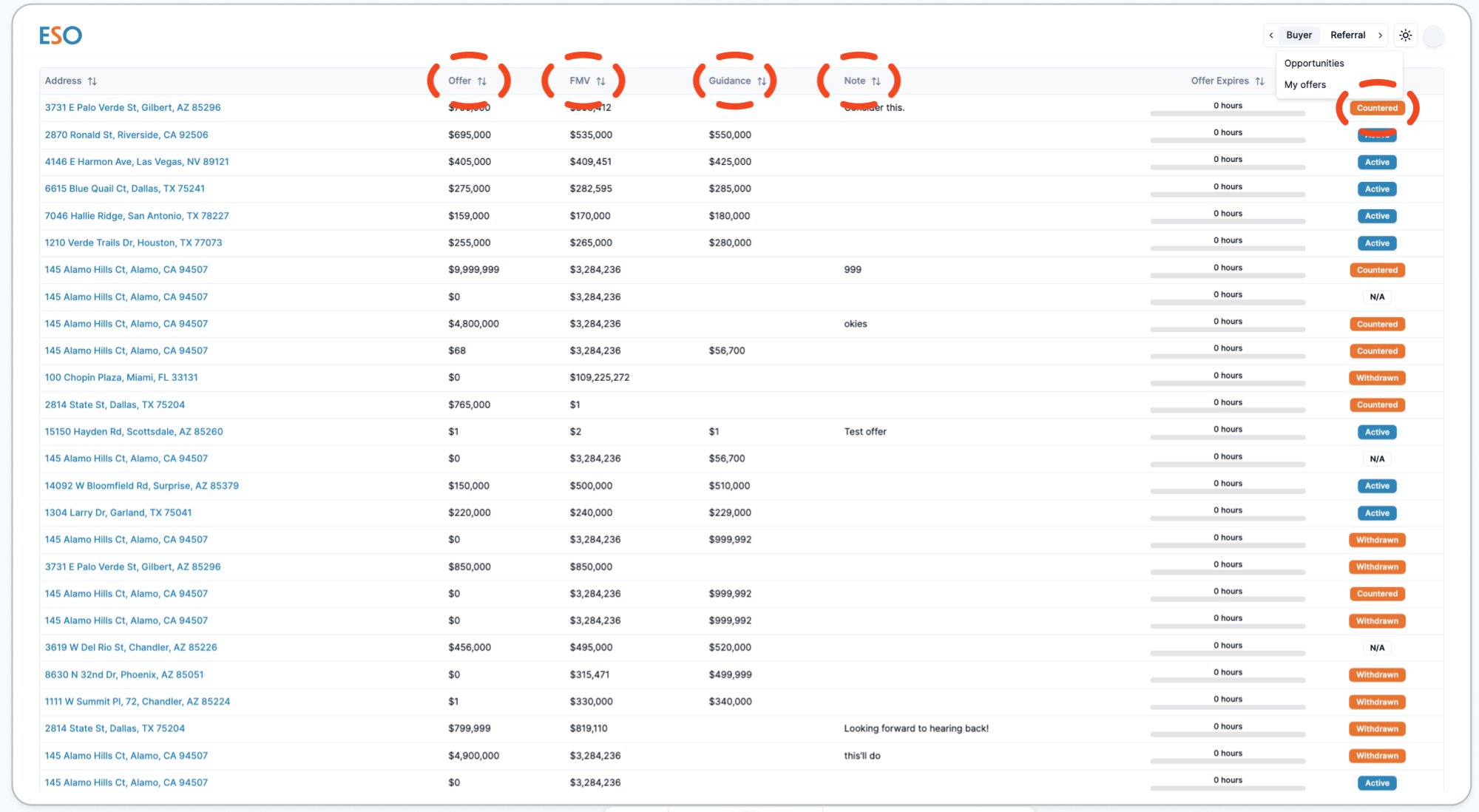
Came in to lead product and delivery, and owned the whole product: internal tooling, analytics and the AI features. Reset how the team specced, prioritized and shipped. The dashboard is shown; internal tooling stays redacted.


The Problem
Easy Street Offers, a Scottsdale, Arizona proptech team, was building something real: a platform reshaping how investors find, evaluate, and close on off-market real estate. The vision was sharp. The execution was getting in its own way.
Engineering sprints kept slipping. Tickets were vague. QA caught issues late, sometimes too late. The team was talented but spending too much time figuring out what to build rather than building. Meanwhile, promising roadmap bets, the kind that could unlock hundreds of millions in inventory access, were sitting idle because no one had bandwidth to shepherd them forward.
The classic early-stage trap: smart engineers, real product instinct, but the connective tissue between strategy and execution just wasn't there yet.
On top of the process gaps, the team had started integrating AI into core product workflows. Prompt quality was inconsistent. Outputs weren't being evaluated rigorously. The reliability bar needed to be higher before it could go anywhere near production.
The Approach
I came in as Technical Product Manager with a mandate to bring order to the chaos, without slowing things down. That meant getting into the details fast and earning trust by making the engineers' lives easier before asking anything of them.
First: fix the specs. Most of the velocity problem traced back to ambiguous tickets. Engineers were making judgment calls they shouldn't have to make. I rebuilt the spec process around clear acceptance criteria, explicit edge-case documentation, and QA checklists that front-loaded the hard questions. Fewer surprises in review. Fewer cycles wasted.
Second: get in the room with leadership. The big inventory opportunity required executive alignment and careful sequencing. It wasn't just a feature, it was a strategic expansion with real business and technical dependencies. I worked directly with founders and leadership to map the roadmap, identify the blockers, and build the case for how to sequence the bets. That groundwork is what eventually unlocked $1B+ in new inventory access.
Roadmap work at an early-stage startup isn't just prioritization. It's knowing when to push, when to hold, and how to frame a big bet so executives can say yes to it.
Third: build reliable AI infrastructure. The team's AI ambitions were real but needed a foundation. I developed prompt frameworks designed for consistency across different use cases, built evaluation rubrics to actually measure output quality, and put guardrails in place to catch failure modes before they reached users. The goal was AI that was trustworthy in production, not just impressive in a demo.
The property detail view, before and after
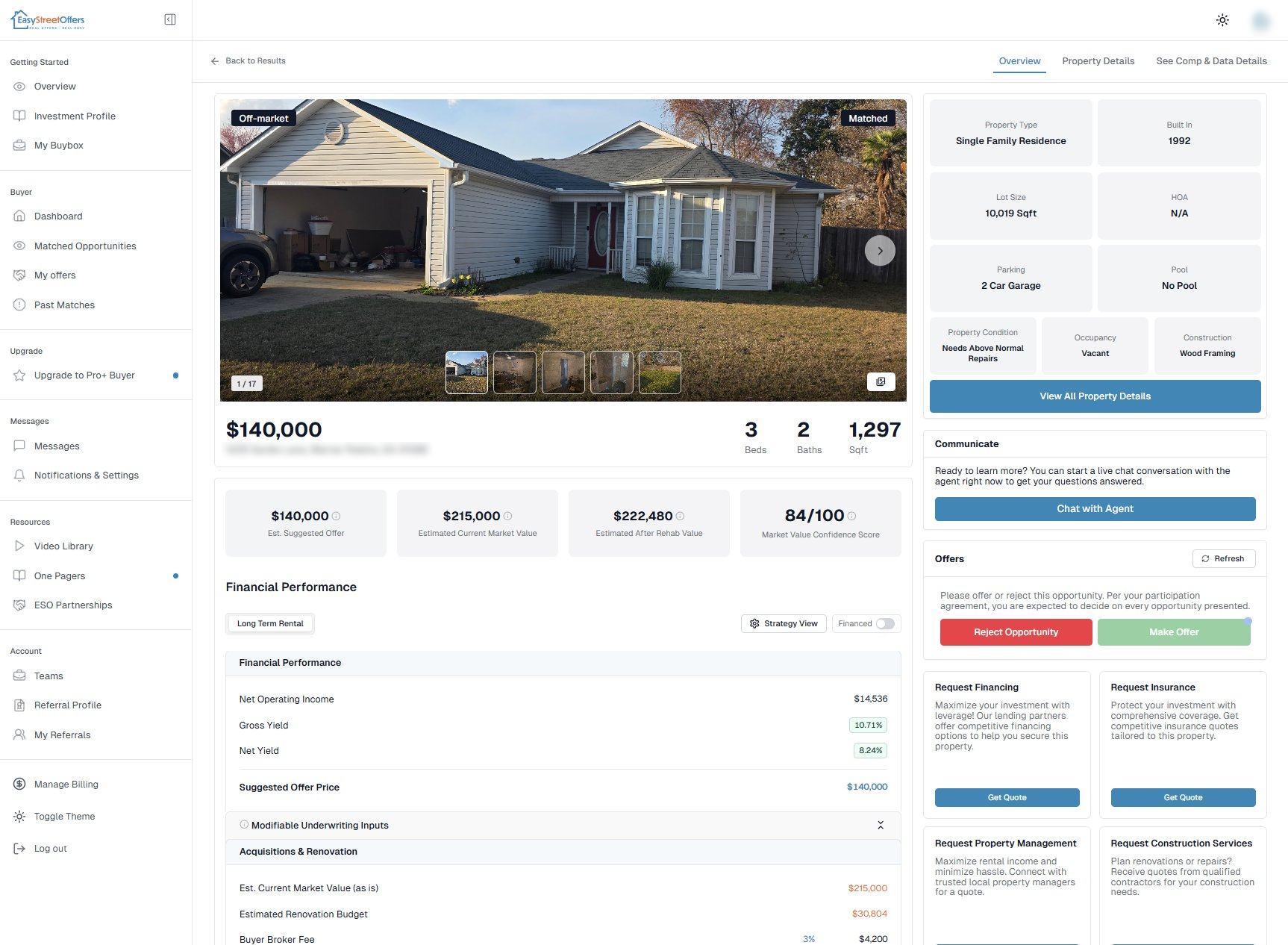
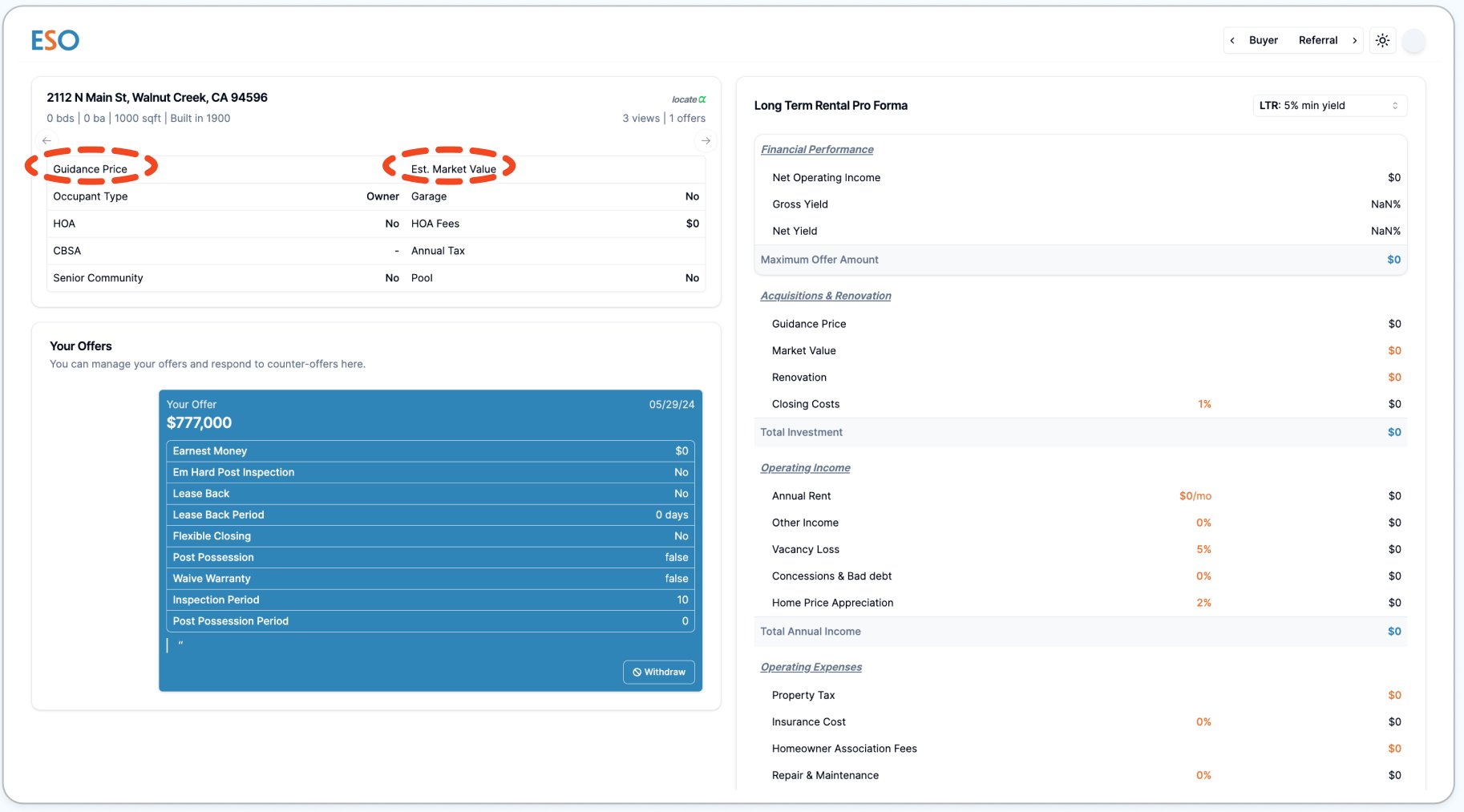
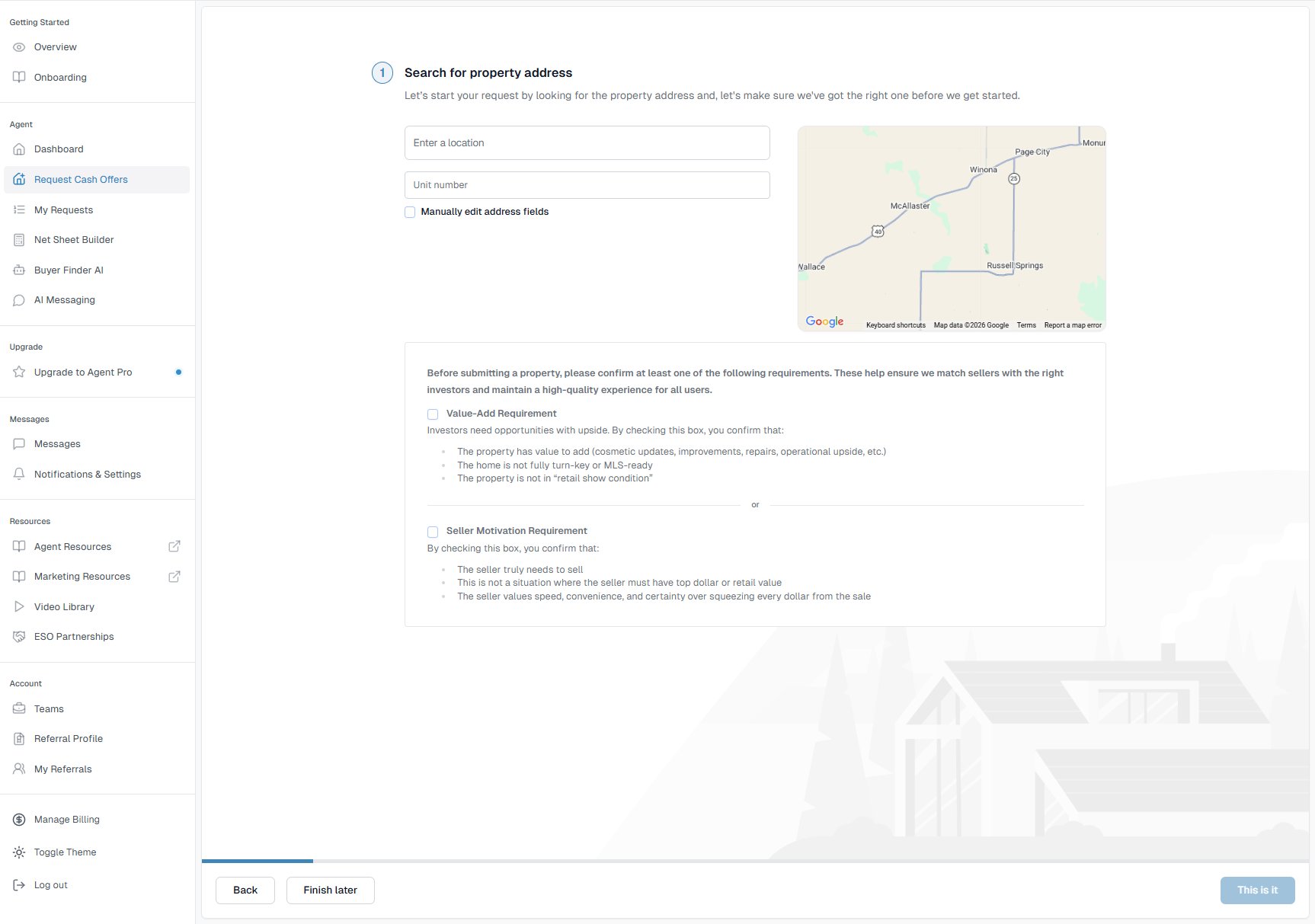
Fourth: conversion. Working across design, engineering, and data, we identified friction in the user journey, prioritized the highest-leverage interventions, and shipped a series of changes that compounded into a ~25% conversion improvement. Not one big swing, but a disciplined sequence of smaller ones.
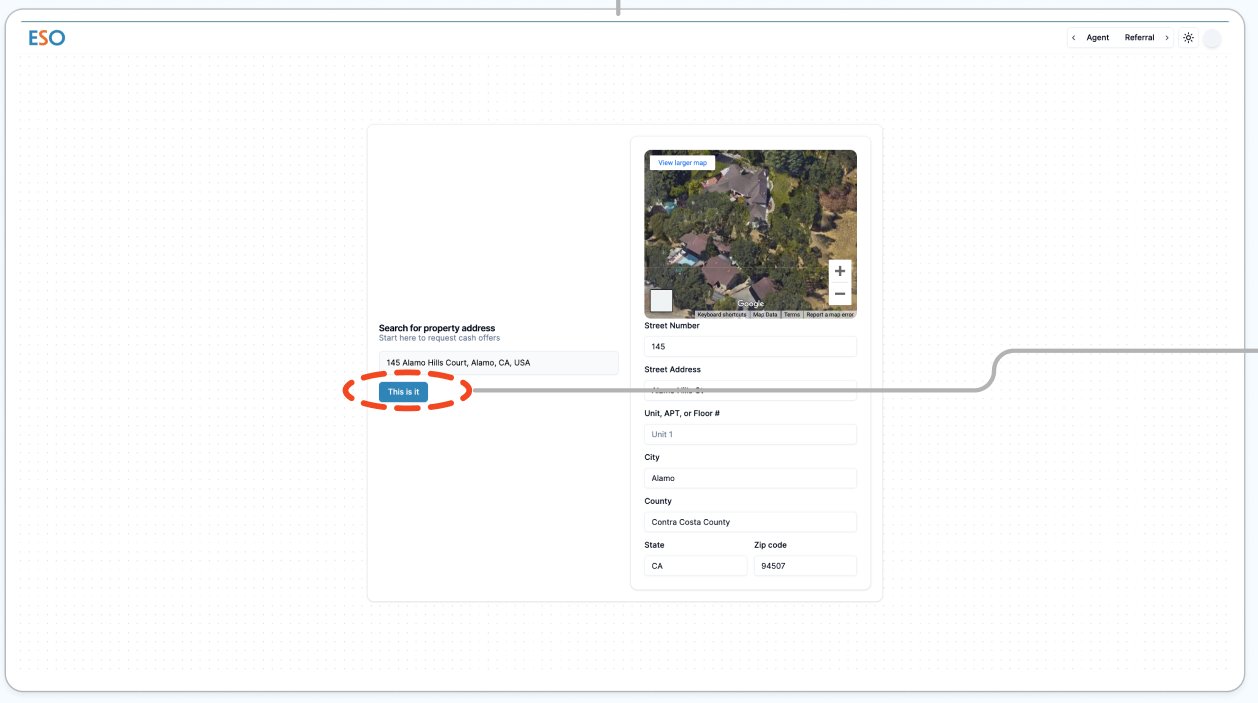
The agent-side cash offer submission flow, before and after
The Results
- ~30% improvement in engineering velocity. Driven by tighter specs, cleaner acceptance criteria, and QA processes that caught issues at the right stage instead of the wrong one.
- $1B+ in inventory access unlocked. Through executive partnership and strategic roadmap work that created the conditions for a major platform expansion.
- ~25% conversion improvement. Compounded across multiple targeted interventions, not a single feature launch.
- Production-ready AI infrastructure. Prompt frameworks, evaluation rubrics, and guardrails that brought AI from a liability to a reliable product capability.
Building something similar?
Get a free 20-minute strategy call and we can talk through what is in the way.
Get a free 20-minute strategy call →